Home › Basement Epoxy Flooring
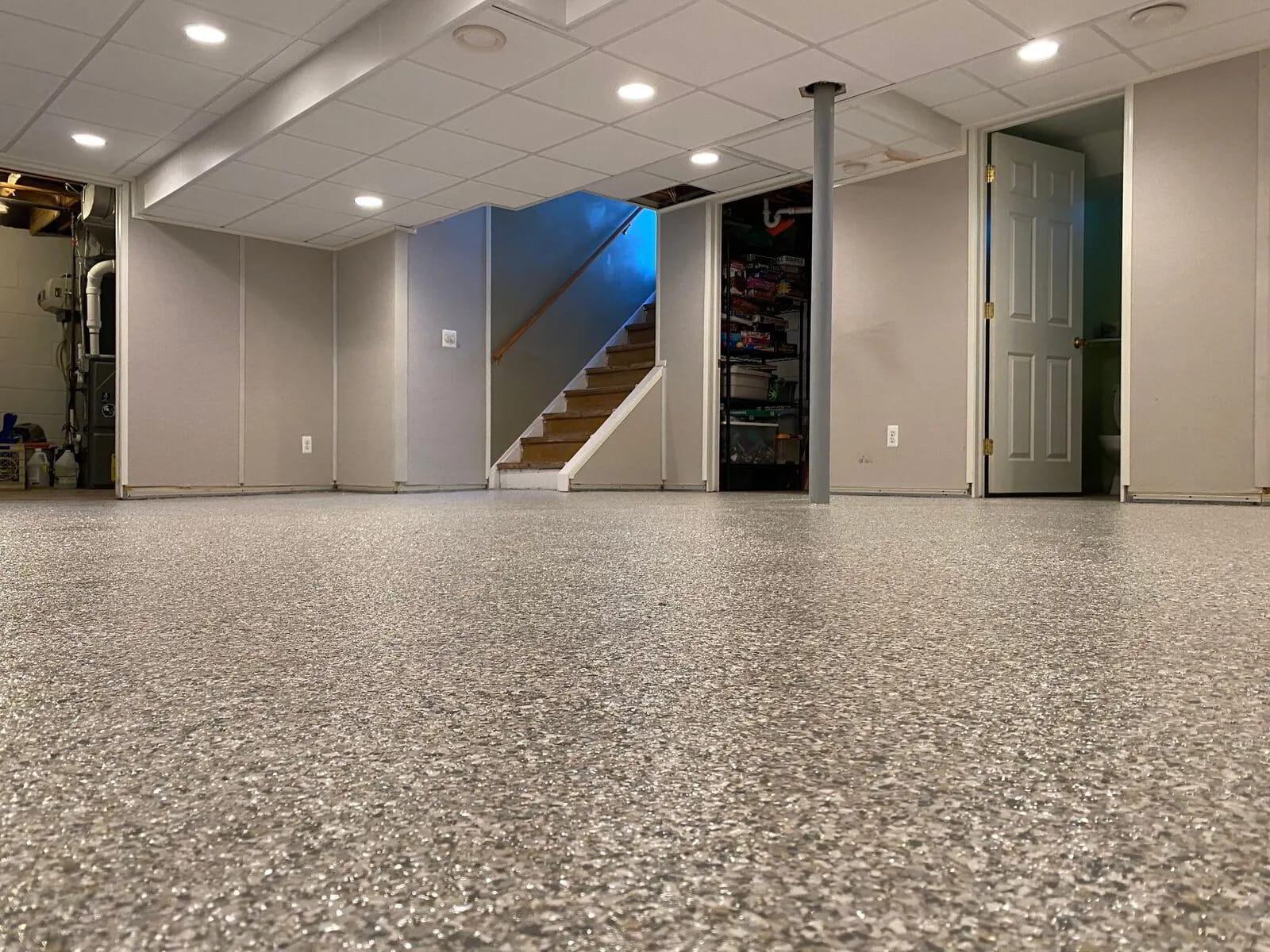
Superior Epoxy New York installs moisture resistant basement epoxy flooring in Brooklyn, NY that turns dark, dusty concrete into a bright, livable space. Our systems resist mold, mildew, and minor moisture while creating a smooth, easy to clean surface. Whether you are finishing a family room, gym, or storage area, we design a basement epoxy floor that performs year round.
Superior Epoxy New York provides professional basement epoxy flooring throughout Brooklyn, NY, New York and the surrounding area. Our licensed, insured crew delivers safe, clean, on-time work with a free estimate before anything begins. Call (332) 895-7100 or request your free quote.
Basement Epoxy Flooring Built for Brooklyn Homes
Basement epoxy flooring is not just about making a concrete floor shiny. For Brooklyn properties it is about dealing with older foundations, occasional moisture, and tight access. Superior Epoxy New York focuses on those specific Brooklyn issues so your basement floor actually holds up, not just looks good on day one.
A typical Brooklyn basement sits under a brownstone, brick rowhouse, prewar co-op, or mixed use building. Many of these slabs are decades old and not perfectly flat. Some were never meant to be finished living space. When we plan a basement epoxy flooring project, we start by looking at how the building was built, how water moves around the foundation, and how you intend to use the space. A laundry and storage basement needs a different epoxy system than a basement gym or a rental studio.
Basement epoxy flooring gives you a single, continuous surface that is easier to keep dry and clean than bare concrete or tile. Properly installed, it resists road salt tracked in from Brooklyn streets, occasional dampness from summer humidity, and impact from stored items. The key is choosing the right epoxy system and preparing the existing concrete correctly for your specific basement conditions.
How We Install Basement Epoxy Flooring Step by Step
Our process is very specific because basements in Brooklyn rarely start from a perfect slab. Superior Epoxy New York uses a multi step approach to make sure the epoxy bonds properly and does not peel or bubble.
1. Inspection and moisture checks: We inspect the slab for cracks, previous coatings, efflorescence, and any signs of active moisture. In older rowhouses in neighborhoods like Park Slope, Bed Stuy, or Bay Ridge it is common to see hairline cracking and patchwork from old repairs. We can perform moisture readings to see if a vapor mitigation step is needed.
2. Mechanical surface prep: We use industrial grinders with dust collection to remove paint, glue, old epoxy, and the weak top layer of concrete. This is crucial in Brooklyn basements where previous owners often painted the floor with hardware store paint. Grinding opens up the pores of the concrete so the epoxy can soak in and lock on.
3. Crack and joint repair: We fill cracks and control joints with epoxy or polyurea repair materials and re grind them flush. If your basement has wider settlement cracks which is common near older foundations we stitch and rebuild them so they do not print through the new floor.
4. Moisture or vapor control (if needed): If tests show elevated moisture, we apply a moisture tolerant primer or a vapor barrier epoxy before the main build coats. Skipping this step is the main reason cheaper basement epoxy floors fail in Brooklyn.
5. Epoxy application: Depending on your choice, we apply either a high build solid color epoxy, a flake system, or a decorative metallic system. Typically this involves a primer coat, one or more build coats, and then a protective topcoat. Each coat is rolled out at a specific thickness with squeegees and rollers to achieve the right film build.
6. Topcoat and cure: In basements we usually recommend a polyurethane or polyaspartic topcoat on top of the epoxy for better scratch and chemical resistance. Once applied, the floor needs to cure. Light foot traffic is usually okay after 24 hours but we recommend waiting several days before moving heavy storage racks or gym equipment back in.
Throughout the process we manage dust, odor, and building access so you can still use the rest of your home or building. In multi unit Brooklyn buildings we coordinate with superintendents and follow house rules for elevator pads, debris removal, and work hours.
Design Options That Work in Real Brooklyn Basements
Basement epoxy flooring does not have to look like a factory. Superior Epoxy New York offers finishes that make sense for actual Brooklyn uses, whether the space is a family hangout, rental unit, studio, or organized storage.
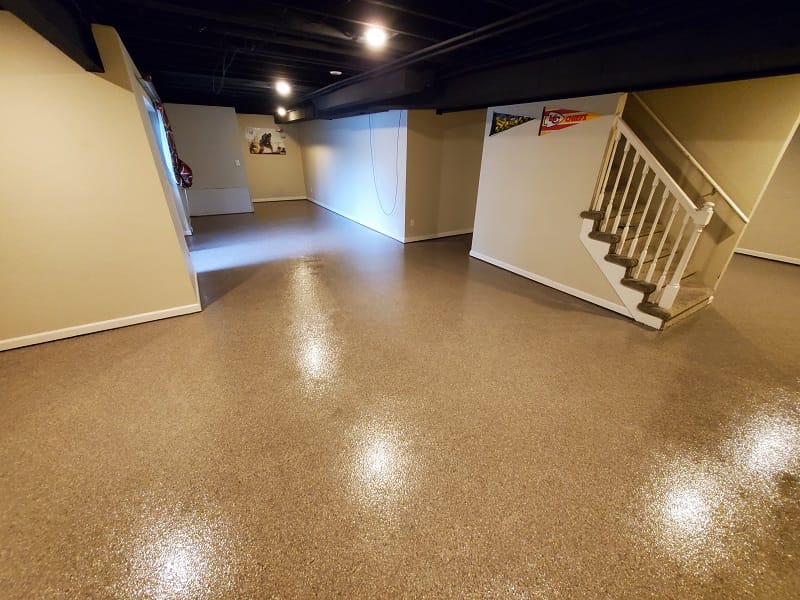
Solid color systems: These are popular for simple, bright basements. We often install light gray, off white, or tan because they reflect light in basements with limited windows. Solid color floors can be finished with a satin or gloss topcoat. For utility basements in places like Marine Park or Kensington, a solid system with a slip resistant additive is a practical choice.
Flake epoxy floors: This system includes vinyl flakes broadcast into the epoxy to add texture and hide dust, scuffs, and minor imperfections. They are ideal for multi use basements that act as both storage and playroom. You can choose neutral blends that match existing walls, or higher contrast mixes that help define zones, for example, gym area versus storage.
Metallic and decorative systems: In converted garden apartments or creative studios we install metallic epoxy that mimics stone or abstract patterns. This works well in many Brooklyn brownstone garden levels where owners want a modern finish over an older slab without the height and cost of tile.
Practical add ons: In basements used as workshops or bike storage we can add extra slip resistance, define walkways with different colors, or integrate small coves at wall bases to make mopping easier. If you have floor drains, we shape and feather the epoxy around them so water still finds the drain instead of pooling. For mechanical rooms we sometimes use a different, more chemical resistant topcoat where boilers or oil tanks sit.
During the design stage, we walk you through how each option will look in your specific space, taking into account low ceilings, existing lighting, and whether neighbors above might be sensitive to shine or glare bouncing from basement windows.
Cost, Timelines, and What Affects Your Basement Epoxy Price
Costs for basement epoxy flooring in Brooklyn vary because no two basements are the same. Superior Epoxy New York provides clear, line item estimates so you know exactly what you are paying for.
Key factors that drive cost:
• Existing floor condition: Removing thick layers of old paint or failed epoxy, repairing significant cracking, or leveling low spots adds labor and materials. A relatively clean, flat slab in a newer building in Downtown Brooklyn will cost less to prep than a crumbly, painted floor in a 100 year old rowhouse in Sunset Park.
• Moisture mitigation: If your basement shows high moisture readings or regular damp patches, we often need specialty primers or a full vapor barrier layer. These products are more expensive but they prevent peeling and blistering later.
• System type and thickness: Solid color epoxy with a standard protective topcoat costs less than a multi coat flake or metallic system. Thicker, high build systems or additional slip resistant layers also add to material costs.
• Access and logistics: Narrow staircases, no direct exterior entrance, and limited parking can affect labor time. In some Brooklyn buildings we need to bring equipment and materials through common areas, which takes more planning and protection.
Typical projects range from a couple of days to about a week. Day one is usually grinding and repairs. Day two and three are epoxy and flake or metallic applications. Topcoats and curing follow. Weather, humidity, and basement temperature can influence cure times, so we schedule work to minimize disruption and explain exactly when you can walk on and load the floor.
We are upfront about what can be done to save money without hurting long term performance, such as choosing a simpler finish but keeping critical prep and moisture steps. We will also tell you when a cheap shortcut, like skipping grinding or using a home center kit on a damp slab, is likely to fail in a Brooklyn basement environment.
Common Basement Issues We Solve and How to Get Started
Basements in Brooklyn share a few consistent problems: moisture, uneven slabs, and leftover DIY coatings. Superior Epoxy New York is set up to deal with each of these so your basement epoxy flooring project does not repeat old mistakes.
Moisture and dampness: Many basements have seasonal seepage or stay humid in summer. We identify where the moisture is coming from. If it is vapor from below the slab we address it with appropriate primers or barrier coats. If it is active water intrusion through walls or bulkheads, we may recommend you handle drainage or waterproofing first, then we return for the flooring.
Uneven and patched concrete: Older slabs often have humps, low spots, and patched trenches from plumbing work. We grind high areas, fill low ones with repair mortar or epoxy, and feather transitions so the finished floor is smooth underfoot. This is especially important if the basement will be used for a home gym, rental unit, or playroom.
Old paint and failed coatings: We remove latex floor paint, glue, mastics, and failing epoxy mechanically, not with simple chemicals. This provides a clean substrate so the new epoxy bonds. If another contractor previously coated right over damp or dirty concrete, we strip back to sound material and rebuild the system correctly.
If you are considering basement epoxy flooring, the best first step is a site visit. We walk the space with you, point out potential issues, take moisture readings where helpful, and discuss how you plan to use the basement in the next 5 to 10 years. From there, Superior Epoxy New York provides a written scope with system type, prep steps, schedule, and pricing. That way you know what is going on your floor, how long it will take, and what kind of performance you can expect in a real Brooklyn basement, not a showroom.