Home › Decorative Metallic and Flake Epoxy
Superior Epoxy New York creates decorative epoxy flooring in Brooklyn, NY that turns ordinary concrete into a design feature. Our metallic and flake epoxy options deliver depth, movement, and custom color blends that match your style. Ideal for living areas, basements, and garages, these floors combine artistic looks with the durability of high performance epoxy.
Superior Epoxy New York provides professional decorative epoxy flooring throughout Brooklyn, NY, New York and the surrounding area. Our licensed, insured crew delivers safe, clean, on-time work with a free estimate before anything begins. Call (332) 895-7100 or request your free quote.
Decorative epoxy flooring in Brooklyn: what you are actually getting
Decorative epoxy flooring is a hard, seamless coating system that bonds to your existing concrete and turns it into a finished surface with color, depth, and pattern. At Superior Epoxy New York, we focus on two types for homes and businesses in Brooklyn: metallic epoxy and vinyl flake epoxy. Both use a professional-grade epoxy resin over properly prepared concrete, but they look and perform differently.
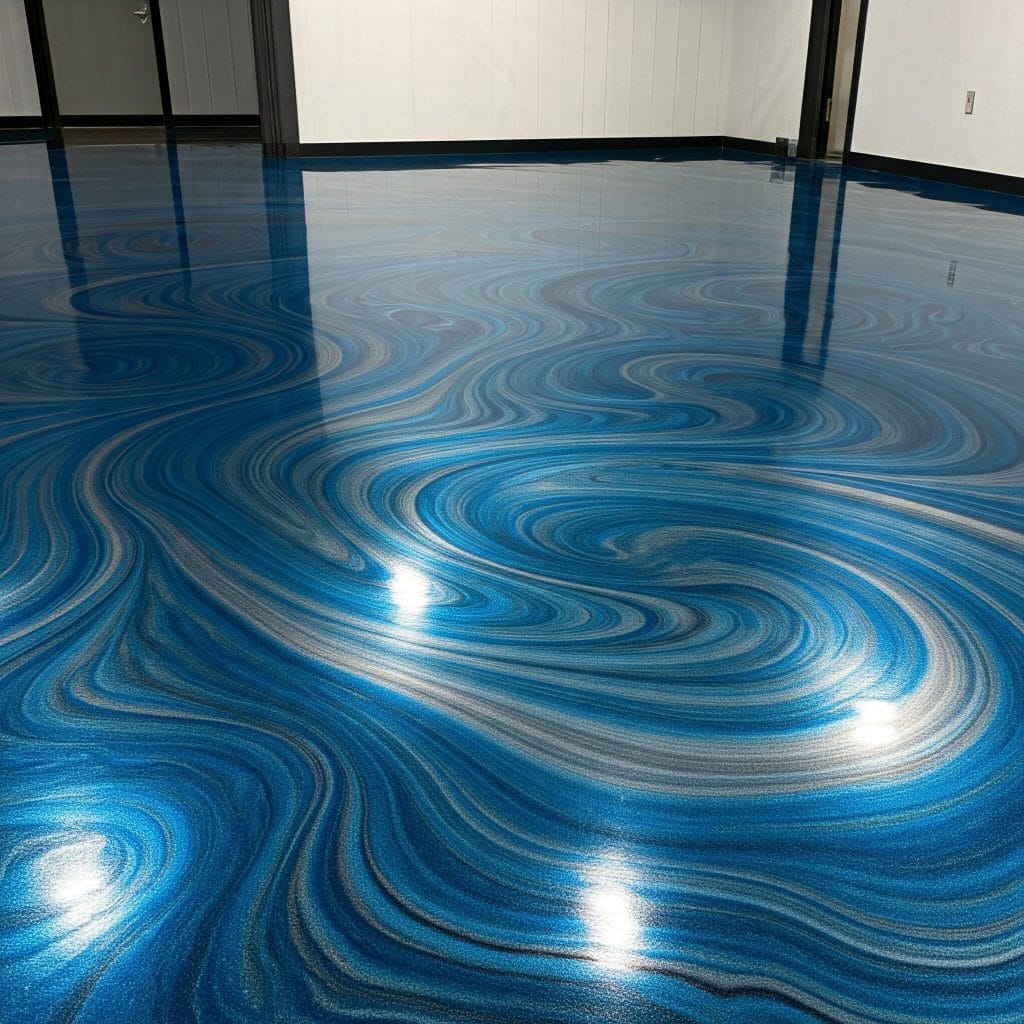
Metallic epoxy uses a clear epoxy loaded with metallic pigments. When our installers move the material with squeegees and brushes, those pigments swirl and settle in natural-looking patterns that can mimic stone, lava, or water. No two floors are identical. This system is popular in apartments, loft entryways, retail spaces, showrooms, and bar or restaurant areas where you want a statement floor that still holds up to foot traffic.
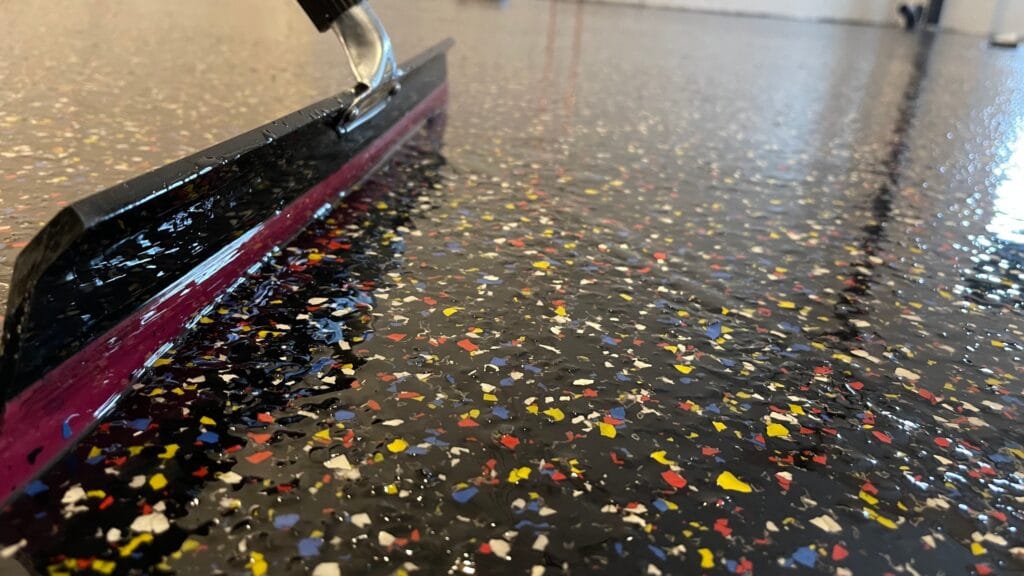
Flake epoxy (sometimes called chip epoxy) uses a tinted base coat with decorative vinyl flakes broadcast into the wet coating. The flakes add color, texture, and light slip resistance. After the flakes cure into the base coat, we seal everything with one or two clear topcoats. The finished floor hides dirt well, is easy to clean, and has a more “granite” or terrazzo-style look that works well in garages, basements, workshops, and commercial back-of-house areas.
Both systems are non-porous when done correctly, which is important in Brooklyn where many basements and ground-level spaces see moisture and tracked-in grime from the street. A proper decorative epoxy flooring install turns a dusty, stain-prone slab into a surface you can actually mop and maintain.
How Superior Epoxy New York installs metallic epoxy floors
A metallic epoxy floor is all about preparation and timing. We start by inspecting your concrete for moisture issues, cracks, and past coatings. In Brooklyn buildings, we often see old paint, patches, and hairline cracks from settling. We mechanically grind the surface with diamond grinders to remove existing coatings and open the concrete so the epoxy can bond. We vacuum with HEPA equipment so dust does not end up in the finish.
If there are cracks or pitted areas, we repair them with epoxy patch materials or fast-setting repair mortars. For active moisture problems, we may recommend a moisture mitigation primer instead of a standard primer. Skipping this step is how you end up with peeling, cloudy, or blistering epoxy, so we do not rush it.
Once the slab is sound and clean, we apply a pigmented primer or base coat. This sets the underlying tone of the floor and helps highlight or soften the metallic effects. After that cures to the right stage, we mix clear epoxy resin with metallic pigment powders. Working in sections, we pour the metallic mix, spread it with notched squeegees, and then manipulate the surface with rollers, brushes, and solvents to create movement and depth.
This is where experience matters. Temperature and humidity in Brooklyn apartments and storefronts affect how long the epoxy stays workable. On humid summer days, we adjust our mixing ratios and batch sizes so the material does not set too fast. We also control air flow so air conditioning or fans do not push dust or create ripples in the wet coating.
After the metallic layer cures, we apply a UV-resistant clear topcoat (often a polyurethane or polyaspartic) to protect the effect, add scratch resistance, and set the final sheen. In most cases, metallic systems require at least two to three visits over two to three days, plus cure time before heavy use.
How a flake epoxy system is built, step by step
A flake epoxy system is structured and predictable, which is ideal if you want a uniform, practical floor. We begin with the same mechanical prep that we use for metallic systems: grinding, cleaning, and concrete repair. Most Brooklyn garages and basements have oil stains, old glue from tiles, or uneven patches, so surface prep can take as much time as the actual coating work.
First, we apply a tinted epoxy base coat that matches or complements the chosen flake blend. While the base coat is still wet, we broadcast decorative vinyl flakes across the surface by hand. For a full broadcast, we throw flakes until the floor is completely covered and the epoxy is no longer visible. This creates a thicker, textured surface that hides imperfections and adds slip resistance.
After the base coat cures, we scrape and vacuum the floor to remove loose flakes and knock down any high spots. This step makes the texture consistent and prepares the surface for the clear topcoat. We then roll on one or two clear coats, depending on the level of chemical and abrasion resistance you need. In busy Brooklyn garages or commercial kitchens, we often recommend an additional high performance topcoat for better durability.
Flake floors are more forgiving in high-traffic, high-abuse areas because the pattern disguises small scratches and dirt. For Brooklyn clients who use their garage as a workshop or home gym, this is often the better choice than metallic, which shows wear more easily if you move heavy items or drag equipment.
We also adjust the flake size and broadcast density to match your needs. Smaller flakes create a more subtle, terrazzo-like appearance. Larger flakes and heavier coverage are useful where you want more traction or where the concrete below has visible patchwork that you want to mask.
Color, design, and texture options that work in New York spaces
Decorative epoxy flooring should fit the space instead of fighting it. At Superior Epoxy New York, we do a design review before we start mixing any material. For metallic installations, we help you choose one to three pigment colors, then decide on effects like marbling, veins, or soft clouds. In smaller Brooklyn apartments or narrow storefronts, too many contrasting colors can make a space feel busy, so we usually lean toward a base color and one accent metallic for depth.
For commercial spaces, we often coordinate metallic floors with brand colors or lighting. Under warm lighting, copper and bronze metallics can create a rich, welcoming look. Under cooler LED lighting, silver and graphite tones feel more modern. We also discuss where furniture, fixtures, or displays will sit so the main visual movement in the floor stays visible and not covered.
With flake epoxy, the main choices are base color, flake blend, flake size, and texture level. For garages and workshops in Brooklyn, gray base coats with mixed gray, black, and white flakes remain popular because they hide road salt, tire marks, and everyday dust. In basements that double as living spaces, we see more neutral tan or greige blends that look less industrial. We can increase or decrease the topcoat build to adjust how smooth or grippy the floor feels.
If you need specific performance features, such as extra slip resistance near building entrances where slush gets tracked in, we can add anti-slip additives to the topcoat. These range from fine, almost invisible media for indoor living spaces to more aggressive texture for ramps or utility rooms. All of this is decided up front so you know exactly how your decorative epoxy floor will look and feel.
Costs, scheduling, and what Brooklyn customers should plan for
The cost of decorative epoxy flooring in Brooklyn depends on three main factors: surface condition, system type, and project size. Heavily damaged concrete, adhesive removal, or moisture mitigation can add labor and materials. Metallic systems usually cost more than flake because of the material cost and the additional installation skill and time required.
Smaller projects like a 200 square foot entryway have a higher per-square-foot cost because setup, travel, and equipment mobilization are roughly the same whether we do 200 or 800 square feet. For multi-unit residential or larger commercial spaces, the cost per square foot can come down because we can work more efficiently across a bigger area.
In Brooklyn, another variable is access. Walk-up buildings and no-parking situations mean more time moving equipment and materials. If your project is above ground level, we factor in how we will get heavy grinding equipment and resin up and down safely. We discuss these logistics during your estimate so there are no surprises.
As for scheduling, spring and fall are generally ideal because temperature and humidity are more stable. In summer, we work around high humidity and heat by adjusting working hours and material choice, but we may need more ventilation and climate control to ensure a clean cure. In winter, we must confirm that interior temperatures can stay within the product manufacturer’s requirements, usually at least in the mid 60s, throughout the cure period.
Plan on keeping people and pets off the floor for at least 24 hours after final topcoat, and avoid heavy furniture or vehicle traffic for 3 to 5 days, depending on the system and conditions. We will give you a written cure and use schedule so you can plan moves, store openings, or deliveries accordingly.
Common issues with decorative epoxy floors and how we prevent them
Most epoxy flooring failures are not product issues, they are prep or planning issues. In Brooklyn, we frequently see DIY or low-bid installations where coatings peel, bubble, or yellow within a year. Superior Epoxy New York focuses on prevention by looking at the whole environment instead of just the slab.
Moisture from below the slab can cause bubbling, hazing, or loss of bond. We test suspect areas, especially in older brownstone basements or ground-floor units, and if readings are high we recommend moisture-tolerant primers or separate mitigation systems. Skipping this step because it is cheaper almost always leads to problems later.
Temperature and humidity can also affect cure and appearance. If the space is too cold, epoxy may not cure correctly and can stay soft or tacky. If it is too hot or humid, working time shrinks and surface defects like roller marks or inconsistent metallic movement can occur. We schedule pours when we can control these conditions reasonably, and we use dehumidifiers or temporary climate control if needed.
Surface contamination is another issue. Oil, silicone, and cleaning residues can cause fish-eyes or bare spots in the coating. Before we mix any epoxy, we degrease, grind, and vacuum thoroughly. If we find soft or contaminated concrete, we remove it rather than coating over it.
Finally, we set realistic expectations. Decorative metallic and flake epoxy flooring is extremely durable, but it is not indestructible. Dragging metal furniture, dropping heavy tools, or spinning hot tires in place can damage the surface. We explain how to maintain the floor: use soft wheels or pads under heavy items, clean with non-abrasive cleaners, and avoid harsh solvents. When wear does occur, we can often refresh the floor by sanding and re-topcoating instead of starting from scratch, which is a big advantage over tile or bare concrete.