Home › Commercial Concrete Prep and Moisture Control
Superior Epoxy New York performs commercial concrete preparation for epoxy in Brooklyn, NY so your coatings adhere and perform. We use industrial grinding and shot blasting, repair joints and spalls, and install moisture control systems where needed. Proper substrate prep helps your investment in epoxy flooring last in demanding commercial environments.
Superior Epoxy New York provides professional commercial concrete preparation for epoxy throughout Brooklyn, NY, New York and the surrounding area. Our licensed, insured crew delivers safe, clean, on-time work with a free estimate before anything begins. Call (332) 895-7100 or request your free quote.
Commercial Concrete Prep That Protects Your Epoxy Investment
If you want an epoxy floor that holds up to Brooklyn traffic, forklifts, and spills, the most important step is commercial concrete preparation. Superior Epoxy New York focuses first on the slab beneath the coating, because 90 percent of epoxy failures are really concrete prep or moisture problems.
On this service, we inspect your commercial space in person, whether it is a Bushwick warehouse, a Park Slope retail space, or an industrial building near the Brooklyn waterfront. We look for signs of past coatings, sealers, patch materials, glue, or oil that will interfere with epoxy bonding. We also check for moisture readings, cracks, and surface flatness. From that site visit, we build a prep and moisture control plan specific to your slab instead of using a one size fits all approach.
For property managers, GC teams, and facility owners, our goal is simple. When we finish the concrete prep and moisture control, any high quality epoxy system can be installed on a clean, stable, and dry substrate with a much lower risk of peeling, bubbles, or blistering.
Step by Step Surface Prep for Commercial Slabs
Real commercial concrete preparation for epoxy is more than a quick grind. We follow a structured process meant for heavy use environments.
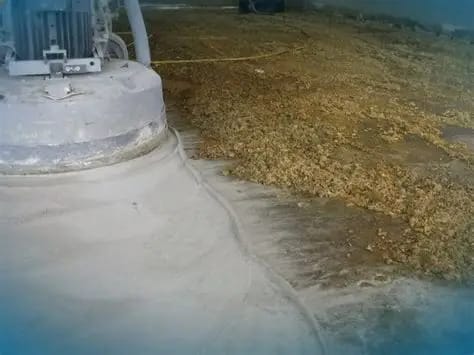
First, we remove any existing coatings, tile mastics, carpet glue, paint, or acrylic sealers. In Brooklyn, we often see old VCT tile adhesive in schools and municipal buildings, and thick paint in older industrial spaces. We use industrial planetary grinders with appropriate diamond tooling to strip these materials down to sound concrete. For edges, columns, and tight corners, we use hand grinders so the profile is consistent across the entire area.
Second, we create the correct surface profile. Most commercial epoxy systems require a concrete surface profile (CSP) of 2 to 4. We choose metal bond diamonds based on how hard your slab is. Older Brooklyn buildings often have very hard, dense concrete that needs more aggressive tooling, while some newer warehouse slabs are softer and require different bonds to avoid gouging. We keep the grinding pattern overlapping and uniform, so the epoxy wets into the pores evenly.
Third, we vacuum thoroughly with HEPA filtered dust collection equipment. This step matters in occupied buildings like grocery stores and medical offices, where air quality is a concern. Clean concrete is not just visually dust free; the pores must be open so primers and moisture mitigation products can penetrate.
Crack Repair, Leveling, and Joint Treatment
Once the main surface is profiled, we address imperfections that would print through an epoxy coating or cause movement later. Brooklyn concrete often has hairline map cracking from age, structural cracks from settlement near subway lines or heavy truck routes, and random patches from decades of repairs.
We start by chasing active cracks with a crack chaser blade to open them into a clean, bondable channel. Then we fill them with low viscosity epoxy or polyurea repair material that is compatible with the planned epoxy system. For wider cracks and spalls, we may use a combination of epoxy mortar and silica sand to rebuild missing concrete and feather it smooth.
If the slab has waves, low spots, or birdbaths that would collect liquids, we recommend patching or cementitious self leveling in targeted zones, not automatically across the entire floor. That keeps costs rational for Brooklyn owners while still meeting functional needs like forklift traffic or drainage toward floor drains.
Control joints and expansion joints are handled based on how the space is used. For warehouse aisles or production lines, we often fill joints with semi rigid polyurea after prep so lift trucks roll smoothly without chipping edges. For garages and areas expecting slab movement, we may keep some joints functional and detail them into the coating system instead of burying them completely.
Moisture Testing and Why It Matters in Brooklyn
Moisture is one of the biggest hidden risks for commercial epoxy floors, especially in parts of Brooklyn with a high water table or older basements. Hydrostatic pressure and vapor drive can push water through the slab from below. If that vapor gets trapped under an epoxy layer, it can cause blisters, bubbles, or cloudy discoloration.
Before any moisture control solution is chosen, Superior Epoxy New York performs industry standard tests. For existing buildings, we often use in situ relative humidity (RH) probes along with surface moisture meters. Where appropriate, we can coordinate calcium chloride testing. We place tests in representative locations: near exterior walls, by roll up doors, in low lying areas of the slab, and near known water intrusion points.
If the readings are too high for the epoxy system you want, we do not ignore the problem. Instead, we design a mitigation plan that might include a moisture vapor reduction epoxy primer, additional grinding to open the surface, and occasionally addressing drainage or sealing issues outside the building if water is entering from grade. In waterfront or below grade spaces, we are very transparent about what mitigation can realistically do, and whether additional building envelope work may be required to protect your investment.
Moisture Mitigation Systems and Product Choices
When slab moisture is elevated, the solution is not just a thicker topcoat. We specify and install moisture mitigation systems that are designed to handle vapor pressure beneath commercial epoxy.
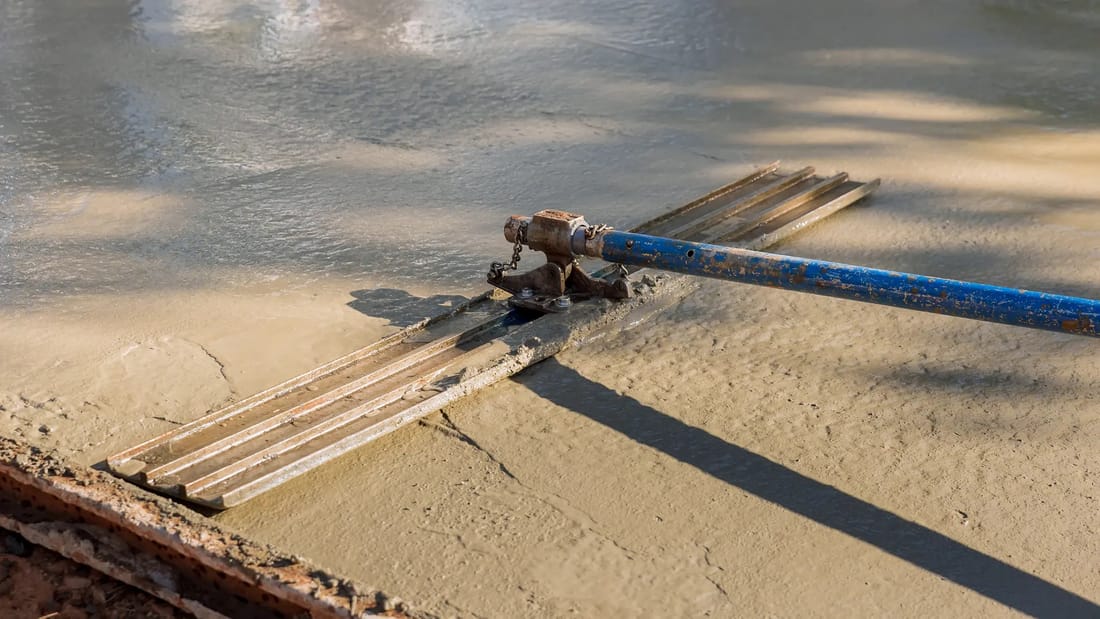
Typically, this involves a high build, 100 percent solids epoxy moisture vapor barrier applied after the final grinding and cleaning. The concrete must be clean and porous, with no dust, oils, or curing compounds. We roll and squeegee this primer to achieve the manufacturer required mil thickness, often in the 10 to 18 mil range, depending on test results. While it cures, we monitor temperature and humidity, which is especially important during Brooklyn shoulder seasons when nights are cool and days are humid.
In many commercial projects, we broadcast sand into the wet moisture barrier to create a mechanical profile for the main epoxy body coat. This step makes the system more forgiving during installation and improves long term adhesion. For areas with chemical exposure, such as commercial kitchens or manufacturing, we choose moisture barrier products that are compatible with higher build novolac or urethane topcoats.
We always align product selection with real world use. A light duty showroom in Williamsburg can use a different system than a high traffic loading dock in Sunset Park. Our proposals specify which products we plan to use, their moisture tolerances, and how each layer interacts, so your facilities team and GC know exactly what is under the finished floor.
What Affects Cost and How We Work in Active Brooklyn Properties
Commercial concrete preparation for epoxy is customized work, so cost is driven by real site conditions rather than just square footage. The main factors are how many passes of grinding are needed, how much crack and joint repair is required, whether self leveling is needed, and the type and thickness of moisture mitigation system.
If your Brooklyn space has multiple layers of old coatings, thick patch jobs, or mastics, removal time will be higher. Elevated moisture that requires a full vapor barrier system will also add material and labor. On the other hand, newer, cleaner slabs in warehouse spaces can often be prepared more quickly, keeping costs down.
Superior Epoxy New York is used to working around tenants and business operations. We can phase work by area, schedule grinding and moisture barrier installation during off hours, and coordinate with your other trades so prep is completed before electrical, racking, or equipment installations. We use dust collection on all grinding equipment to minimize cleanup and protect nearby inventory or sensitive areas.
Before you decide on any epoxy installer, ask for their plan for concrete prep and moisture control specifically, not just the finish coat. Request details about the surface profile they will achieve, what crack repair materials they use, how they test moisture, and which moisture mitigation products they propose. If you share recent test reports with us, we can often provide options that balance performance, downtime, and budget, tailored to real Brooklyn conditions.